there’s no established formal theory of livestreaming. even though it has been one of the most dominant media forms of the last decade, it is primarily described through audience behavior and isolated modes. unlike film, television, or documentary, livestreaming has no agreed-upon framework for understanding formal norms within the medium, and how it actually functions.
the democratization in broadcast technology and platforms has allowed the people to create live art typically limited to televised institutions, but the lack of external resources and subsequent formal norms that have developed over the past few decades due to platform specifics and capitalistic incentivization have led creators to work within narrow frameworks. the problem is that streaming is as expansive as any other audiovisual medium.
what i have developed is a bimodal framework for livestreaming.
livestreaming can be defined through a system that functions similarly to documentary modes. streaming is a visual synchronous art experienced through a mediated surface, using time as material to shape reality as it happens. it is based in immediacy and co-presence between host, audience, and the system behind it. the main difference in livestreams is whether or not the framework allows the event to be altered by system logic, or the audience.
because of these conditions, two primary modes emerge: passive, and reactive. these do not describe genre, but formal behavior, acting as a descriptive lens for common modes.
passive streams unfold without being altered by external inputs, changing through its own internal logic. the audience observes, but does not shape the event. the stream is happening regardless of you.
reactive streams unfold from being altered by external inputs, changing through audience participation, or system prompts. the audience observes, and shapes the event. the stream is happening because of you.
within that category are subtypes with models based in the formal norms and types of livestreaming. subtypes describe their primary behavior, rather than content.
subtypes
spectative
live media where the primary action is being watched with commentary, or facilitated by a host reacting to defined stimuli.
observational
continuous real-time sustained capture of environments, bodies, or atmospheres with minimal narrative or formal interference.
narrative
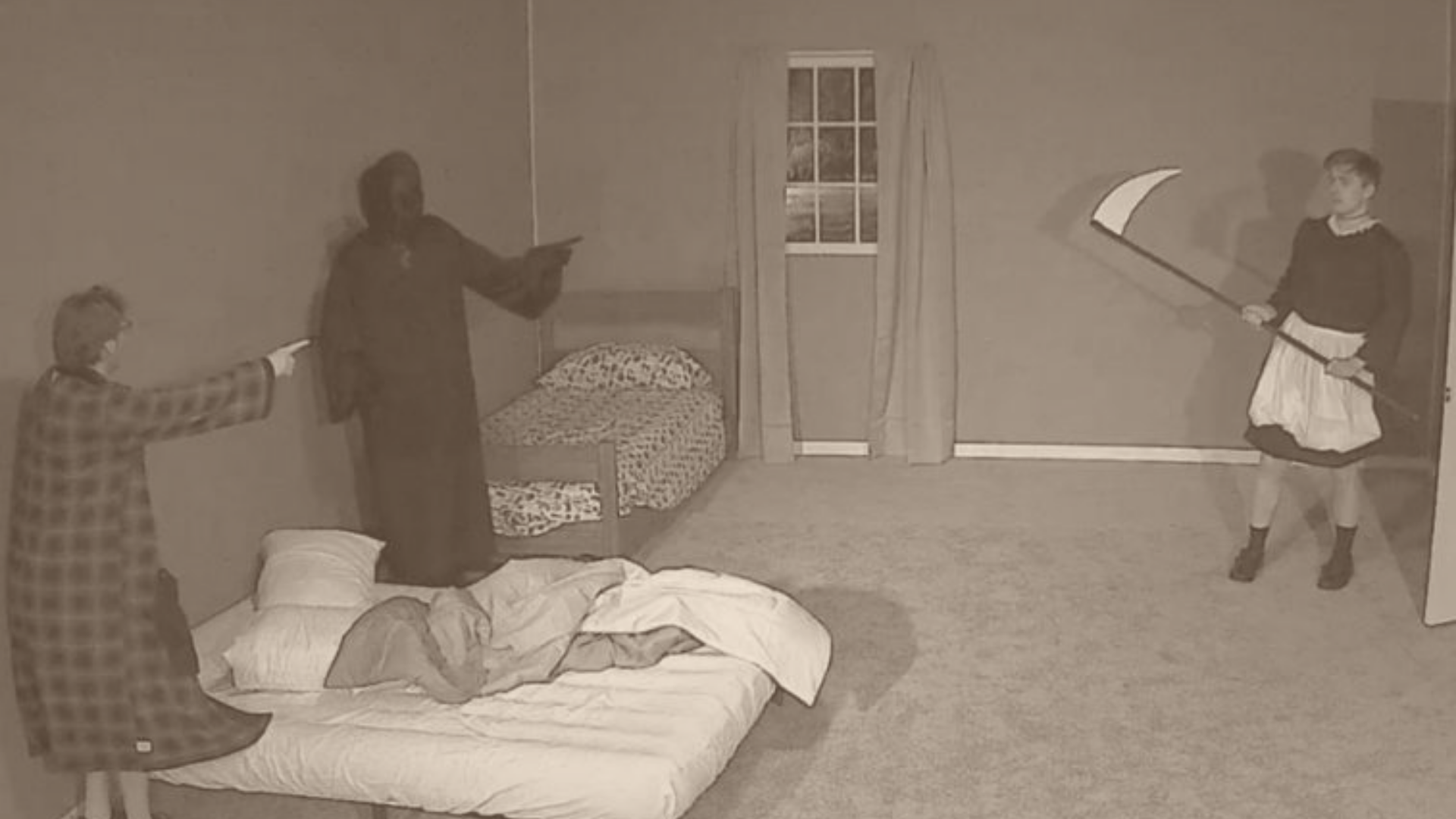
live structures centered around dramatic action, staging, and juxtaposition of images. often compared to taped screenings of plays, and classic multicam live studio sitcoms.
documenative
real-time capture of events or programs for public, institutional, or educational purposes. it functions as supplemental material for pre-existing events, often acting as an extension for equitable reach.
informational
provides ongoing functional or civic information for institutions, organizations, hospitality and education providers, and communities.
procedural
streams governed by rules, systems, or automated logics that run autonomously or from audience input.
poetics
conceptual or exploratory works that use “liveness” as material, emphasizing form, sensation, or real-time composition, typically outside of a narrative framework.
now that we have these ideas, we can apply them to existing live works. this table is an example of application. it is a tool showing how to illustrate the ways that we can think in terms of these subtypes.
if you have specific examples you'd like to share, please send them to me hollyampersand @ gmail.com and i will add them with credit
| subtype | passive | reactive |
|---|---|---|
| spectative | sports, talk shows, actual play | common streamers (i.e. northernlion, hcjustin), warp zone, drawfee, fishcenter live |
| observational | earthcams, animal cams, “ambience” streams, lofi beats, slow tv | drive me crazy, dashducks, debssa |
| narrative | national theatre live, jay scheib, distant vision, the third day: autumn, intervallum | cry of mann, generation loss, the weather |
| documenative | local public access, library lecture simulcasts, religious services, local amateur sports, archive rebroadcasts | hybrid programming, zoom classes, open city council meetings, on-the-ground coverage by citizen journalists |
| informational | citytv, weatherscan recreations, c2 school district, wdw today | tiktok shop, ryan hall |
| procedural | autonomous generative systems | twitchplayspokemon, picco, media landscape, nothing forever, ai family guy |
| poetics | dina kelberman's stream work, racertrash, vjing | my first film |
the baseline for these subtypes is that hybridity is a natural feature. most forms share commonalities due to the underlying framework, especially with those that share primary modes. a stream may blend two or three subtypes,but every one has a dominant organizing principle. that’s why we define the work based on the prominent stylistic and structural conditions. let’s take a look at an example to understand how we can put these theories into practice.
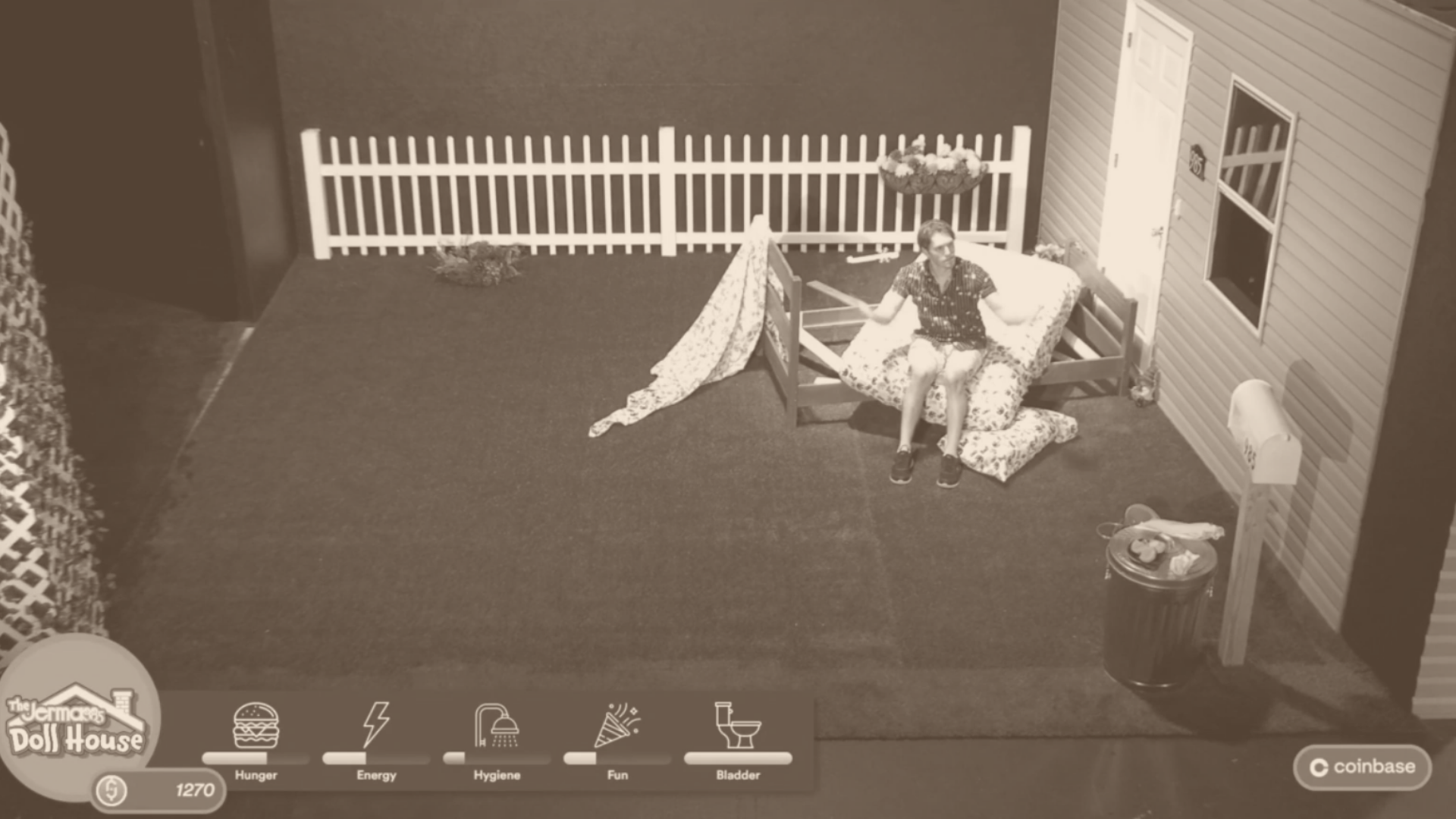
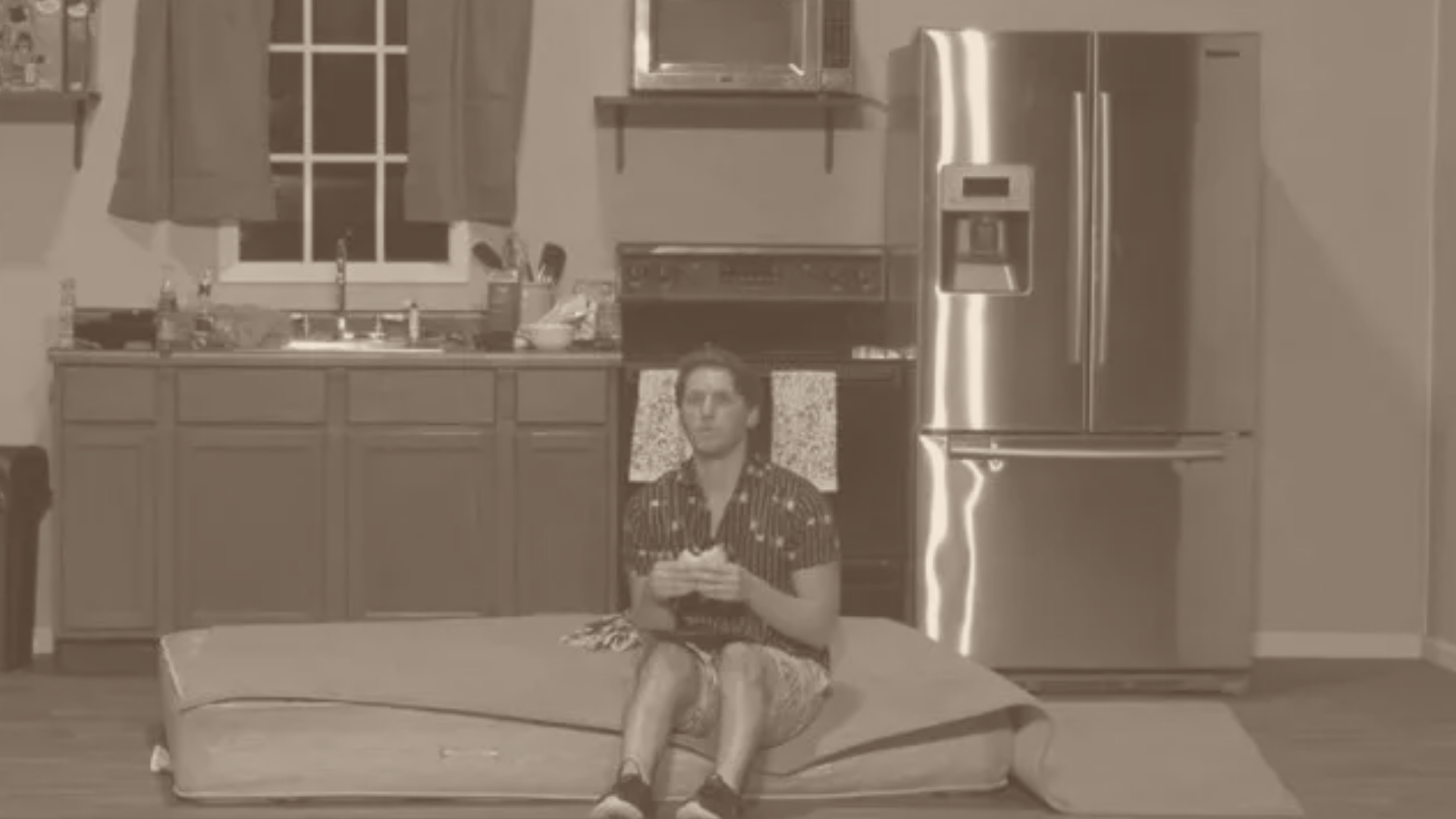
the jerma985 dollhouse is a 2021 livestream work directed by alex herreid. it is a live simulation pastiche of the sims, filmed on an expansive open studio set. viewers act as the players of the real life “sim” controlling jerma’s actions. it starts on a daily schedule, and the game is framed through multiple “needs” meters (biological and primal desires such as fun, hunger, hygiene etc) and a basic framework of voting and item spawning. we wake up in his home, and the chat decides what happens next: either based on his individual needs or new pre-determined variables the chat decides to introduce.
the piece is shaped by chat input that results in system prompts. those live decisions alter the state of the stream in real time. it can’t unfold or continue without co-creation. this is what makes it reactive.
systems trigger states and the environment updates based on predefined mechanics. what this means is that it is governed by a rule set rather than a script, or narrative elements. the core logic is rule based, therefore we end up with our first subtype as procedural.
the second subtype of narrative comes in, when we consider the output of the framework.
there is a diegetic world (the house) a character (jerma) with evolving situations and episodic action with dramatic beats shaped by external input.
the key question to ask here:
is the narrative the goal, or a byproduct?
reactive procedural
- interactivity drives a system
- core function is rules, mechanics, or logic structures
- system exists as the meaning itself, narrative is secondary as incidental emergence of system behaving.
reactive narrative
- interactivity drives a story
- core function is dramatic progression, emotional beats, or staged situations
- system exists to provide narrative meaning, procedurality is secondary to the storytelling intent.
it’s the perfect example of subtype hybridity: procedural logic, and narrative staging happening concurrently, with audience agency driving every moment. but if we are focusing on the primary subtype, the reactive procedural framework is the primary driving source for the story, and the narrative is a byproduct of the system. from this, we can conclude that jerma985’s dollhouse is a reactive procedural livestream.
some questions you can ask yourself to determine between subtypes:
- does the image change due to my actions?
- does interaction alter a system, a story, or an environment?
- are you cooperating with mechanics, people/characters, or events?
- is the piece organized around rules, drama, time, or information?
- is narrative the goal, or a byproduct of the system’s behavior?
try flipping to a random twitch channel and use those questions to determine the primary mode and subtype of the stream. we can understand this expansive medium just by looking and explaining what is unfolding in front of us.
now that we can look at any stream and describe its function through shared terms, we can not only understand these works better but also better ideate on how we can find new ways of making meaningful art.